





















The Complete Guide to Incident Management for Security and Facility Teams

Introduction: The cost of getting it wrong
Here is a fact worth sitting with: most security and facilities teams are not failing because their people are bad at their jobs. They are failing because the systems around those people were never designed for the environments they now operate in.
Fragmented tools. Manual processes. Disconnected data. Slow communication chains. These are not edge cases. They are the daily reality for thousands of Security and FM professionals managing complex, high-stakes environments – from commercial skyscrapers and retail estates to campuses, cultural venues and critical infrastructure.
And the consequences are real. Slower response times. Missed escalations. Repeat incidents. Regulatory exposure. Financial losses that compound over time.
This guide is for security directors, facilities managers, operations leads, and anyone responsible for keeping people, assets and places safe. It covers what incident management actually involves, why most teams are under-equipped, and what good looks like, including what to look for when evaluating incident management software.
What is incident management?
Incident management is the structured process of identifying, reporting, responding to, and resolving events that disrupt or threaten normal operations, safety, or security.
For security teams, that could mean a theft, a trespass, a violent incident, an access control breach, or a suspicious package. For facilities teams, it might be a building system failure, a slip-and-fall, a fire alarm activation, or a contractor incident. In reality, most teams deal with all of the above, often simultaneously, across multiple sites.
The goal of incident management is not simply to document what happened. It is to respond appropriately, limit impact, investigate effectively, learn from what occurred, and prevent it from happening again.
Done well, incident management reduces risk. It protects people. It supports compliance. And it generates the organisational intelligence that enables better, faster decision-making over time.
Where does an everyday occurrence end and an incident begin? Read what is incident management?
Why security and facilities teams face unique challenges
Security and FM teams operate at the intersection of people, places, and risk. That makes their incident management challenges distinct from, say, an IT team managing a software outage.
Consider what a typical security or FM operation requires:
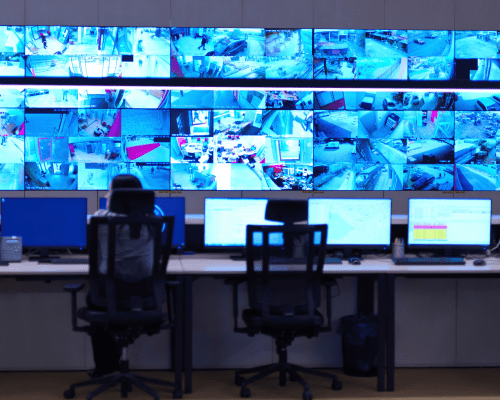
- Real-time situational awareness across multiple locations
- Coordinated response between dispersed teams
- Accurate logging of thousands of events, daily
- Evidence collection that can withstand legal scrutiny
- Compliance with health and safety legislation
- The ability to escalate rapidly when a situation demands it
Most organisations are trying to meet those requirements using a combination of paper logs, spreadsheets, radio communication, and general-purpose ticketing tools that were never built for this purpose. The result is predictable.
The three core failure modes
Fragmented systems: and the data intelligence problem
The biggest operational obstacle facing security and FM teams today is fragmentation. Common examples include:
- CCTV systems that don’t talk to access control
- Incident logs kept in spreadsheets that no one analyses
- Paper occurrence books that can’t be searched
- Evidence stored on personal devices
- Shift handover notes passed verbally or scribbled on clipboards
When systems are fragmented, data cannot flow. And when data cannot flow, intelligence cannot be built. Patterns go undetected. Repeat incidents are not connected. The organisation cannot answer basic questions like: which site has the highest incident volume? What types of incidents are increasing? Which locations are generating the most risk?
This is not just an operational inconvenience. It is a strategic liability. Organisations that cannot analyse their incident data are flying blind, managing risk reactively, rather than proactively shaping outcomes.
Ineffective response – slow, inconsistent, and uncoordinated
When an incident occurs, seconds matter. A delayed response can mean an escalated situation, a more serious injury, a greater financial loss, or a missed opportunity to apprehend a suspect.
Ineffective response is usually the product of three things:
- Poor situational awareness: the right people don’t know what’s happening
- Lack of standardised procedures: teams improvise rather than follow tested protocols
- Inadequate communication tools: information passes through too many people before it reaches those who need it
The outcome is response that is slower than it needs to be, less coordinated than it should be, and inconsistent across teams and shifts. That inconsistency matters both operationally and legally. If your team responds differently to the same type of incident depending on who is working, you have a governance problem as well as a safety one.
Poor communication: the silent incident multiplier
Communication failures do not just slow response. They actively make situations worse. The person with the right information is not in the right place. The manager who needs to authorise an action is not contactable. The tenant, visitor, or occupant who needs to be notified remains unaware.
Poor communication also undermines accountability. Without a clear record of who was told what and when, post-incident review becomes guesswork. Reporting to clients, regulators, or senior leadership is based on reconstruction rather than fact.
For organisations operating across multiple sites or managing third-party security contracts, communication failures carry additional commercial and reputational risk. Clients expect documented evidence of response. Insurers require accurate incident records. Courts need evidential chains of custody.
How to manage security incidents: the incident management lifecycle
Understanding incident management as a lifecycle, rather than a single act of reporting, changes how teams approach it. It also clarifies where incident response fits: response is one stage of the lifecycle, not the whole of it. Read more on incident management vs incident response.
1. Detection and reporting
Incidents need to be captured accurately, completely, and quickly. The moment of reporting is where most data is lost. If the process is slow, unclear, or inaccessible, under-reporting becomes endemic. Teams log only what they must, rather than everything that matters.
Good incident reporting should be mobile-first, intuitive, and fast. It should guide the reporter through capturing:
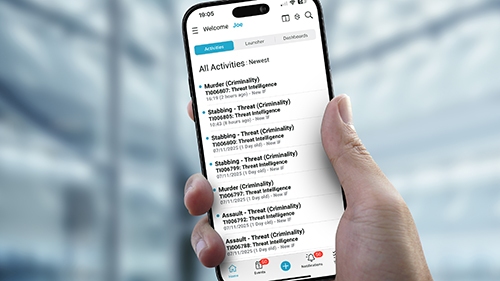
- Location and incident type
- Involved parties, witnesses, and suspect details
- Supporting media – photos, video, documents
- Status, commentary, and real-time updates
And it should work even without a reliable internet connection.
Under-reporting is one of the most damaging, least visible problems in security and FM operations. If events are not captured, they cannot be managed, analysed, or learned from.
2. Classification and prioritisation
Not all incidents are equal. A minor maintenance fault requires a different response than a violent incident involving a member of the public. Classification systems, incident types, severity levels, and priority categories allow teams to route information to the right people and trigger the appropriate response.
A well-designed incident management system pre-configures these categories. It removes the need for individual operators to make classification judgements under pressure, reducing inconsistency and the risk of misclassification.
3. Notification and escalation
Once an incident is logged and classified, the right people need to know about it immediately. Automated notification removes the human delay from that chain. Relevant managers, supervisors, or response teams are alerted based on incident type, location, or severity, without anyone needing to pick up a phone or send a manual message.
Escalation protocols can also be automated:
- If an incident is not acknowledged within a defined timeframe, the system escalates automatically
- If severity crosses a threshold, higher-level alerts are triggered without manual intervention
- Every notification is timestamped, creating a defensible audit trail of exactly what happened and when
4. Response and management
Response is where preparation meets reality. Teams following documented, standardised procedures respond more effectively than those improvising. SOPs and Emergency Operating Procedures (EOPs) embedded directly into incident workflows ensure the right steps are taken, every time, by every operator, regardless of experience level or shift.
A well-managed response requires:
- Standardised procedures: SOPs and EOPs triggered automatically by incident type
- Live situational awareness: a dashboard showing active incidents, status, location, and assigned responders
- Coordinated action: supervisors and control room teams able to direct response in real time
Real-time visibility is the difference between a control room that is coordinating and one that is catching up.
5. Investigation and case management
Once the immediate response is complete, investigation begins. For security teams, this often means gathering evidence, interviewing witnesses, reviewing CCTV, and building a case file that can support disciplinary proceedings, insurance claims, or criminal prosecution.
That process requires structure:
- Evidence logged and managed with a clear chain of custody
- Suspects, victims, and witnesses recorded
- Financial and operational losses quantified
- Investigation reports produced in formats that meet legal and client standards
Without a dedicated case management capability, investigations are conducted informally – and their outputs are vulnerable to challenge.
6. Reporting and analysis
Every incident is a data point. Individually, it tells you what happened. In aggregate, it tells you why, and what to do about it.
Operational reporting feeds the intelligence that drives better decision-making. It should cover:
- Incident volumes, types, and locations
- Response times and resolution rates
- Hotspot identification and trend analysis
- Performance comparisons across sites and timeframes
- Outputs for client reporting, regulatory submissions, and resource allocation
This is the stage where most teams fall short. They collect data during the earlier stages of the lifecycle but fail to turn it into insight. Often, that is because the data lives in formats that cannot be easily analysed – PDFs, spreadsheets, disconnected logs.
7. Learning and prevention
The final stage of the lifecycle is the one that turns reactive operations into proactive ones. Structured post-incident review should ask:
- What root causes contributed to this incident?
- Were there precursor signals that were missed?
- What procedural or environmental changes would prevent recurrence?
- Have similar incidents happened elsewhere – and were they connected?
Structured investigation and analysis, supported by the right tools, closes the loop. It turns incident management from a documentation exercise into an operational improvement engine.
Building a security incident response plan
The lifecycle only works if the response stage is planned before it is needed. A security incident response plan sets out who does what, and in what order, when something goes wrong. Without one, every incident becomes an improvisation.
A practical plan should cover:
- Incident categories and severity levels, so everyone classifies events the same way
- Roles and responsibilities, including who leads, who communicates and who records
- Escalation thresholds and contact chains, with deputies for out-of-hours cover
- Response procedures for your highest-risk scenarios, from medical emergencies to intruders and evacuations
- Communication protocols for staff, occupiers, visitors, contractors and the emergency services
- Evidence and record-keeping standards, so every action is logged as it happens
- Recovery steps that return operations to normal and capture what was learned
Start with risk, not templates. A shopping centre, a university campus and a corporate headquarters face different threats. Base your scenarios on your own incident data and site risk assessments. Then write procedures for the events most likely to happen, and for those with the greatest impact.
Keep procedures short and usable. An operator managing a live incident will not read a ten-page document. Clear, step-by-step SOPs and EOPs, triggered by incident type, are far more likely to be followed.
Then test the plan. Tabletop exercises and live drills expose gaps that look fine on paper: a contact who has left, an assembly point that no longer works, a step nobody understands. Review the plan after every significant incident, and at least once a year.
Finally, make the plan part of daily operations rather than a document on a shelf. When procedures sit inside the same system teams use to report and manage incidents, the plan is applied consistently, on every shift, at every site.
What to look for in incident management software
Choosing incident management software is a significant decision. It shapes how your teams operate, what data you collect, how you communicate, and what you can demonstrate to clients and regulators. Getting it right matters.
Here are the capabilities that distinguish genuinely effective platforms from basic reporting tools.
Mobile-first reporting, including offline functionality
Your team is not always at a desk. They are on patrol, on-site, responding to an event. Incident management software that is not built for mobile is not built for security and FM.
Mobile reporting should be fast and intuitive. It needs to:
- Support photo, video, and document attachments captured in real time
- Enable voice dictation for operators who cannot type while managing a situation
- Operate offline with smart sync for environments with unreliable connectivity
- Allow submissions in under two minutes, without desk access
Pre-configured incident types with flexibility
Security and FM teams deal with a wide spectrum of incident types, from low-level anti-social behaviour to major emergency events. Pre-configured incident categories reduce the cognitive load on operators and ensure consistent classification across teams.
But pre-configured does not mean rigid. The ability to customise forms, add site-specific categories, and configure dynamic fields for different incident types is what makes a platform genuinely usable across complex, multi-site operations.
Automated notifications and escalation workflows
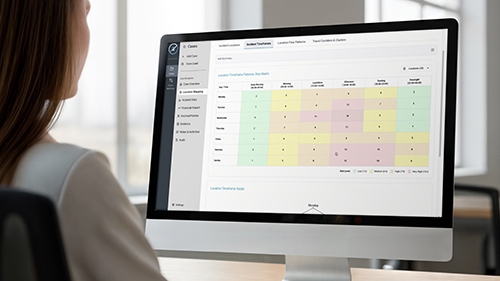
Manual notification is too slow and too unreliable. Automated alerts, triggered by incident type, severity, or location, ensure that the right people are informed immediately. Escalation workflows that activate automatically when thresholds are crossed add a further layer of operational resilience.
Crucially, every notification should be logged. Who received what, when, and whether they acknowledged it. That audit trail is not a nice-to-have. In a post-incident review or legal context, it is essential.
Real-time dashboards and operational visibility
A live operational picture changes how a control room functions. Pre-built dashboards showing active incidents, incident trends, hotspot mapping, and shift handover data give supervisors the context they need to make faster, better decisions.
TV mode, for control room screens, and geospatial mapping of incidents across a site or estate are features that go from luxury to necessity once a team has experienced them.
Case management and evidence handling
The transition from incident to investigation should be seamless. A platform that integrates incident reporting with case management eliminates the duplication and information loss that occurs when teams switch between systems.
Evidence management should include:
- Centralised storage with chain of custody logging
- Ability to link multiple incidents to a single case
- Logging of suspects, victims, witnesses, and involved parties
- Financial and operational loss capture
- PDF report generation for client or legal use
Daily Occurrence Book (DOB) integration
For security operations in particular, the daily occurrence log is the backbone of operational continuity. A digital DOB integrated with incident management should deliver:
- Chronological logging of all operational entries across shifts
- Dynamic linking of log entries to related incidents
- Seamless digital handover between teams
- Export capability for audit and reporting purposes
That replaces the paper-based process with something genuinely more powerful – and far more defensible.
Data analysis and reporting
Raw data is not intelligence. The best incident management software transforms operational data into clear, actionable insight. Look for:
- Incident trend analysis by type, location, and severity
- Response time tracking and closure rate monitoring
- Site and portfolio-level comparison
- Customisable filters and timeframes
- Scheduled reporting exports for clients, regulators, and leadership
That makes it easy to meet reporting demands without additional manual effort.
Integration capability
No security or FM operation runs on a single platform. The incident management system needs to connect with the technology already in place, including:
- Access control and CCTV systems
- Building management systems (BMS)
- HR and contractor management tools
- Mass notification platforms
- Third-party reporting and analytics tools
Robust API integration removes the data silos that fragment operational intelligence. It also future-proofs the investment as the technology landscape evolves.
For a more detailed breakdown, read Top 10 features to look for in an Incident Management System.
The compliance dimension
Incident management is increasingly a compliance imperative, not just an operational preference.
In the UK, the Terrorism (Protection of Premises) Act 2025, known as Martyn’s Law, introduces new legal duties for operators of publicly accessible locations. It requires organisations to have documented, tested procedures for responding to terrorist incidents. Incident management software that supports SOP enforcement, evidential record-keeping, and post-incident reporting is directly relevant to demonstrating compliance.
More broadly, organisations need to evidence how they managed incidents across a range of obligations:
- Health and safety legislation
- Data protection requirements
- Insurance obligations
- Duty of care scrutiny
- Client contractual standards
A timestamped, auditable, secure incident record is the foundation of that evidence.
Manual systems, paper logs, spreadsheets, email chains cannot provide that foundation reliably. A digital incident management software can.
How Zinc supports the incident management lifecycle

Zinc is a security and resilience platform used by some of the UK’s most demanding security and facilities operations, from 22 Bishopsgate and Canary Wharf Estate to Allied Universal, Savills and ISS.
Its incident management module follows the lifecycle described in this guide:
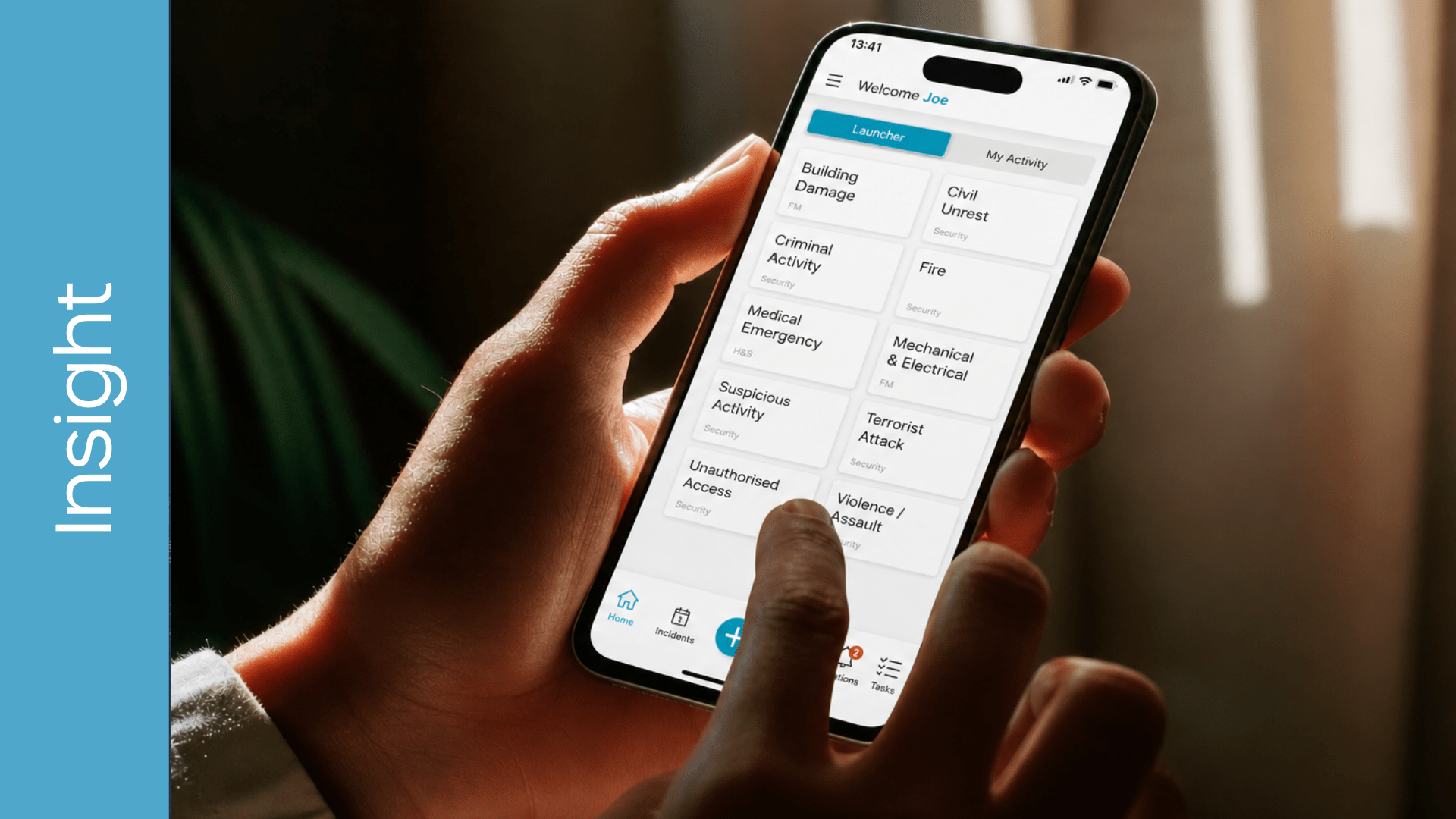
- Reporting: 100+ pre-configured incident types, with mobile reporting that supports photo, video and voice dictation, and works offline
- Notification and escalation: automated alerts by incident type, severity and location, with a full audit trail of who received what and when
- Response: SOPs and EOPs triggered automatically when an incident is raised
- Investigation: case management with evidence handling, chain of custody logging and PDF investigation reports
- Analysis: live dashboards, hotspot mapping and exportable reporting for clients, regulators and leadership
Incident management also connects to the rest of the platform, including the daily occurrence book, mass notification, patrol management, audits and threat intelligence. A patrol can raise an incident. An incident can trigger a task chain and a building-wide alert. The data stays in one place, so intelligence builds over time instead of getting lost between systems.
Choosing the right platform: questions to ask
When evaluating incident management software, these are the questions worth asking:
Can it handle your incident volume and complexity? A platform designed for small teams will not scale to multi-site, high-volume operations. Make sure it can handle the full range of your incident types and the volume of events your teams generate daily.
Is it genuinely mobile? Not mobile-accessible / mobile-first. Can it operate offline? Can operators dictate, attach media, and submit reports in under two minutes while actively managing a situation?
Does it support your compliance requirements? Can it generate the audit trails, evidential records, and investigation reports needed for compliance, health and safety reporting, insurance claims, and legal proceedings?
Can it connect to your existing systems? Integration is not optional. Evaluate the platform’s API capability and existing integrations with the technology you already run.
What does the data look like? Ask to see the reporting and analytics capability in action. If the platform cannot turn your incident data into clear, actionable insight, the operational value is limited.
What does implementation and support look like? Even excellent software fails without effective deployment and ongoing support. Understand what is included, what the onboarding process looks like, and how the vendor supports teams through change.
Conclusion: from reactive to resilient
The difference between a security or FM team that is managing risk and one that is just responding to it comes down to one thing: operational intelligence.
That intelligence is built from incident data captured completely, analysed systematically, and acted on decisively. It does not emerge from paper logs or disconnected systems. It requires a platform designed specifically for the environments where security and FM teams operate.
Incident management software is not an administrative upgrade. It is an operational shift. It is the difference between knowing what happened and understanding why. Between responding when things go wrong and preventing them from going wrong again.
Teams that have made that shift do not go back. The data speaks for itself.
If your operation is still relying on fragmented systems and manual processes, the question is not whether to change. It is how much the delay is costing you.
Ready to move from reactive to resilient? See how Zinc’s incident management software captures, escalates and investigates ever event in one place, or book a demo with our team.



 +44 (0)20 3989 4859
 info@zinc.systems

