




















One Version of the Truth: The Responsible Shopping Centre

Written by Sophie Malone
Contents
03 Why fragmented systems fail boards and communities
04 From disconnected data to one version of the truth
06 Evidence, insurance, prosecution and civil recovery
07 Hotspot-led resource deployment
08 The responsible shopping centre as a safe and inclusive place
09 Board responsibilities and ownership
10 The legislative and regulatory picture
14 My Thoughts
Executive summary
Shopping centres are no longer simply retail destinations. They are complex civic environments where people shop, work, live, socialise, and expect to feel safe, respected, and reassured.
The dream board vision is a centre where every reasonable safety, security, safeguarding and resilience measure is in place; where professional judgement is supported by reliable information; and where people feel confident without being watched for its own sake.
This paper argues that the responsible shopping centre needs one secure, governed version of the truth. By connecting relevant operational systems and data feeds, boards and centre teams can see activity, risk, capabilities, hotspots, incidents, investigations, outcomes and assurance as one connected picture. The purpose is not to create surveillance. It is to focus people and resources on genuine risk, improve response, prevent harm, support proportionate intervention, identify criminal activity and demonstrate that reasonable steps were taken.
The result should be a more accountable operating model: one that can support police investigations and prosecution, defend properly evidenced insurance claims, enable lawful commercial civil recovery where appropriate, and help recover losses or investigation and system costs where legally recoverable. It should also strengthen the everyday experience of customers, colleagues, residents, retailers and visitors through visible, responsive, kind and proportionate stewardship.
Central proposition
A single, secure and governed view of the centre can turn fragmented information into responsible action. It gives boards confidence that risk is understood, ownership is clear, resources are directed where they matter most and evidence is reliable when decisions are challenged.
| From | To | Board benefit |
| Disconnected systems and isolated reports | One governed operational picture | Visibility of risk, capability and control effectiveness |
| Incident counts without context | Outcomes, repeat harm and hotspot trends | Better prioritisation and informed challenge |
| Technology-led monitoring | Human judgement supported by proportionate information | Trust, dignity and lawful intervention |
| Reactive responses | Prevention, preparedness and learning | Resilience and public confidence |
For more information on Incident Management, read our complete guide to Incident Management.
The Dream Board
The dream board does not imagine a risk-free centre. It imagines a centre where risk is visible, owned, and intelligently managed. It is a place where a parent can arrive with confidence, a young person can meet friends safely, a retailer can trade without avoidable disruption, a colleague can raise a concern without fear, and a resident can feel that the wider environment is being responsibly managed.
In this vision, security officers are known and approachable. Facilities teams see deterioration before it becomes danger. Safeguarding concerns are handled with care. Emergency plans are tested rather than left on paper. Retailers, contractors and occupiers understand the part they play. Boards receive information that helps them ask better questions, not simply more questions.
The human test
A responsible centre should feel calm because it is prepared, not because risk is hidden. It should be visibly attentive without being intrusive, firm without being demeaning and commercially successful without compromising dignity, inclusion or lawful process.

Why fragmented systems fail boards and communities
Fragmentation creates false confidence. An incident may be recorded in one system, a relevant video clip held in another, a contractor concern captured in an email, emergency procedures and communications managed in yet another system, and a repeat pattern known only to an experienced officer. Each record may be accurate in isolation, yet the centre can still miss the connected risk.
| Failure | What happens |
| Blind spots | Important signals remain separated by supplier, function, tenancy or shift. |
| Slow decisions | Staff spend time locating information instead of protecting people and preserving evidence. |
| Delayed response | Disconnected communications lead to delays and loss of control, increasing the impact and cost of the incident. |
| Misallocated resources | Visible but low-risk activity can receive attention while repeat harm develops elsewhere. |
| Weak assurance | Boards see activity levels without knowing whether controls reduced harm or improved outcomes. |
| Unequal impact | Inconsistent interventions can create avoidable bias, complaints and loss of trust. |
| Lost learning | Near misses, complaints, safeguarding referrals and investigation outcomes are not joined into a cycle of improvement. |
The answer is not to collect everything. It is to connect what is relevant, lawful and proportionate, give it clear ownership and turn it into decisions that can be explained and reviewed.
From disconnected data to one version of the truth
One version of the truth is not a single database, and it is not a demand to replace every system. It is a governed operating model: agreed definitions, lawful integration, clear ownership, reliable timestamps, role-based access, consistent risk classification and a shared incident chronology. Systems may remain specialised, but the board and authorised centre team should be able to understand the same material facts.
| Relevant feed | What it can contribute | Responsible use |
| Incident reporting and case management | What happened, who was affected, actions, outcomes and repeat patterns | Consistent classification, ownership and learning reviews |
| CCTV, body cameras and video evidence | Context, chronology, identification and corroboration | Purpose limitation, access controls, retention and disclosure readiness |
| Access control, alarms and patrol activity | Presence, response, vulnerabilities and control performance | Use for safety and security purposes with transparent governance |
| Footfall, parking and place activity | Density, movement, congestion and environmental patterns | Use only where appropriate, necessary and proportionate |
| Retailer intelligence and occupier reports | Repeat loss, antisocial behaviour, safeguarding and local context | Agreed sharing rules, accuracy checks and fair treatment |
| Facilities, fire, health and safety and safeguarding records | Hazards, defects, referrals, near misses and vulnerable-person concerns | Specialist handling, escalation and privacy protection |
| Insurer notifications and investigation records | Material facts, losses, mitigation and claim chronology | Preserve integrity and share on a controlled need-to-know basis |
To learn more about Retail Crime Intelligence, read our article How Retail Crime Intelligence Platforms Work.
Evidence governance
The operating model must make evidence usable when the immediate incident has passed. Every material record should be time-stamped and attributable. Video and digital material should have a documented chain of custody, controlled access and an auditable history of viewing, copying, disclosure and disposal.
- Maintain a clear incident chronology from first report to closure, review or referral.
- Define retention schedules by purpose, legal need, risk and system capability rather than keeping everything indefinitely.
- Use role-based access, strong authentication, access reviews and meaningful audit logs.
- Make disclosure readiness part of normal practice, including preservation of relevant material and recording what has been shared.
- Test cybersecurity, resilience, back-up and recovery arrangements, including supplier dependencies.
- Record decisions and rationale so you can explain proportionate intervention to boards, insurers, regulators, courts, and affected people where appropriate.

Evidence, insurance, prosecution and civil recovery
Reliable evidence has practical value beyond the incident room. It can help an insurer understand what happened, what controls were operating and what mitigation followed. It can support a police investigation or prosecution when the evidential threshold and public-interest considerations are met. It can also support a properly evidenced commercial claim for losses where a lawful contractual or civil basis exists.
| Route | Purpose | Important distinction |
| Insurance notification and defence | Explain loss, causation, mitigation and control performance | Policies, notification requirements and disclosure obligations must be followed; evidence does not guarantee cover. |
| Criminal investigation and prosecution | Provide reliable material to police, prosecutors or courts | The centre does not decide guilt or substitute private action for lawful criminal justice processes. |
| Commercial civil recovery | Seek repayment of proven losses, contractual sums or properly incurred costs where legally recoverable | Requires a lawful basis, accurate loss calculation, fair process and proportionate communications. |
| Criminal asset recovery | Recover criminal property through statutory powers and proceedings | This is distinct from commercial civil recovery and engages the Proceeds of Crime Act 2002 and competent authorities, not a centre’s private entitlement to take assets. |
Civil recovery should never be presented as a criminal penalty. A centre must avoid inflated, speculative, or coercive demands, preserve procedural fairness, and obtain specialist advice where liability, evidence, vulnerable people, or contested facts are involved. Pursue investigation or system costs only where there is a sound legal basis, and the amount is properly evidenced and legally recoverable.
Hotspot-led resource deployment
The objective is not to treat every location as equally risky. It is to understand where harm, vulnerability, failure or repeat activity is concentrated and to deploy people and capabilities accordingly. A hotspot may be a place, time, process, contractor interface, car park route, loading area, tenancy pattern or recurring type of incident.
| 01 | Combine incident severity, frequency, repeat harm, near misses, environmental conditions, vulnerability and confidence in the data. |
| 02 | Prioritise prevention and presence where the evidence indicates genuine risk, while maintaining baseline coverage elsewhere. |
| 03 | Match capability to need: security, safeguarding, facilities, customer service, fire safety, health and safety, police liaison or specialist investigation. |
| 04 | Review whether an intervention changed outcomes, displaced harm, created unequal impact or introduced new risks. |
| 05 | Use professional judgement to challenge the model, especially where data is incomplete, biased or insensitive to context. |
The best dashboard therefore shows not only where activity occurred, but whether the right activity occurred and whether people experienced a safer, fairer and more resilient centre as a result.
The responsible shopping centre as a safe and inclusive place
Safety is not experienced equally. A young person, disabled visitor, older person, lone worker, survivor of harassment, person facing homelessness or someone with a communication difficulty may experience the same environment differently. Responsible operations therefore combine security and safeguarding with accessibility, dignity, listening and reasonable adjustments.
Technology must support professional judgement, proportionality, privacy and kindness. A camera, alert, or risk score prompts trained people to consider what is happening; it is not proof of intent, identity, or guilt. Interventions should be necessary, explainable and proportionate, with routes for challenge, complaint and correction.
Public confidence is an outcome
People should be able to see and feel that the centre is attentive, inclusive and prepared. Confidence is strengthened when staff are approachable, information is handled respectfully, concerns are acted on and the centre can explain why it took a particular step.

Board responsibilities and ownership
Boards cannot outsource ownership simply by delegating delivery to managing agents, security providers, facilities partners, or technology suppliers. Delegation can allocate tasks and specialist competence; it does not remove the board’s responsibility to understand material risk, set expectations, provide resources and seek assurance.
| Board expectation | What good looks like |
| Risk appetite and priorities | Clear boundaries for safety, security, safeguarding, privacy, resilience and commercial recovery. |
| Named accountability | Responsible owners and dutyholders are identified across the board, managing agent, occupiers and contractors. |
| Resources and competence | Funding, staffing, training, supervision and specialist advice match the centre’s risks and complexity. |
| Testing and exercising | Plans for terrorism, fire, evacuation, lockdown, safeguarding, cyber and business continuity are practised and improved. |
| Meaningful information | Dashboards show outcomes, repeat harm, near misses, complaints, referrals, unresolved failures and lessons learned. |
| Supplier and occupier assurance | Contracts, procurement, payment controls, competence evidence, data responsibilities and escalation routes are tested. |
| Public confidence | Feedback, accessibility, complaints and community experience inform decisions alongside operational metrics. |
The legislative and regulatory picture
The UK framework spans legislation, regulators, guidance, contracts, common-law principles, and professional standards. Some duties attach to a building owner, employer, responsible person, operator, landlord, occupier or other defined body rather than to a shopping-centre board as such. Boards should map who holds each duty, how delivery is coordinated and where evidence of compliance is retained.
| Framework | Practical relevance | Board implication |
| Terrorism (Protection of Premises) Act 2025, known as Martyn’s Law | Qualifying premises may need preparation, public-protection procedures and, where applicable, enhanced measures. Planning may include evacuation, invacuation or lockdown, communication and training. | Confirm scope, responsible persons, procedures, training, exercises, coordination and any enhanced requirements. Check commencement, guidance and current implementation at publication. |
| Equality Act 2010 | Discrimination, harassment and victimisation are prohibited, with duties and protections relevant to accessibility and reasonable adjustments. | Ensure policies, design, customer service, security interventions, recruitment and complaints processes are inclusive and evidence-based. |
| Worker Protection (Amendment of Equality Act 2010) Act 2023 | Introduces a proactive duty to take reasonable steps to prevent sexual harassment, with later strengthening of the duty where applicable. | Expect risk assessment, training, reporting routes, contractor and occupier controls, investigation and board oversight. Verify the current statutory wording and enforcement position. |
| Economic Crime and Corporate Transparency Act 2023 | Relevant provisions include corporate criminal liability for failure to prevent fraud for organisations within applicable scope, and controls around associated persons and economic crime risk. | Strengthen procurement, contractor due diligence, payment integrity, service-charge governance, insurance claims, approval trails and data integrity. Do not assume every centre or owner falls within every threshold. |
| Health and Safety at Work etc. Act 1974 | Sets the foundation for duties to employees and others affected by work activities, subject to the role and circumstances of the dutyholder. | Maintain competent management, suitable arrangements, consultation, risk control, reporting and evidence of compliance. |
| Management of Health and Safety at Work Regulations 1999 | Supports systematic risk assessment, arrangements, cooperation, coordination, competent assistance and emergency planning. | Coordinate multiple employers and contractors, review assessments after change or incident and track overdue actions. |
| Regulatory Reform (Fire Safety) Order 2005 | Creates responsible-person duties for relevant non-domestic premises, including fire risk assessment, precautions, emergency arrangements, information, instruction and training. | Map overlapping responsible-person duties in multi-occupancy centres, agree interfaces and preserve evidence of assessment, maintenance, drills and corrective action. |
| Building Safety Act 2022 and Fire Safety (England) Regulations 2022 | May be relevant where mixed-use or higher-risk residential buildings are involved, alongside building safety, information and management requirements. | Identify the applicable building, accountable-person and information-management regime. Coordinate retail, public and residential interfaces with specialist advice. |
| Children Act 1989 and 2004; Care Act 2014 | Safeguarding responsibilities and partnership expectations may arise where children or adults with care and support needs may be at risk. | Maintain referral pathways, trained staff, information-sharing arrangements and escalation routes. Do not investigate beyond competence or displace statutory agencies. |
| Modern Slavery Act 2015 | Relevant organisations may have transparency, supply-chain and reporting responsibilities, including board-approved statements where the statutory threshold applies. | Apply supply-chain due diligence to cleaning, security, construction, logistics and other higher-risk services; monitor labour indicators and ensure escalation. |
| UK GDPR and Data Protection Act 2018 | Processing must have a lawful basis and respect purpose limitation, data minimisation, transparency, accuracy, security, retention and individual rights. | Use privacy impact assessments where appropriate, data-sharing agreements, role-based access, audit logs, cybersecurity controls and CCTV or video-surveillance governance. Clarify controller and processor roles. |
| Evidence, disclosure, insurance and civil claims | Incident material may need preservation, disclosure, notification, accurate record keeping and fair handling of claims or recovery action. | Maintain chronology, chain of custody, retention and auditability. Obtain advice on privilege, disclosure, limitation, liability, notification and lawful recovery before taking contested action. |
How to read this framework
The table distinguishes practical governance from definitive legal advice. A board should not claim compliance merely because a policy exists, nor assume that a supplier’s certificate transfers a statutory duty. The relevant question is whether the responsible person or organisation has made suitable arrangements, provided competent support, tested those arrangements and acted on what the evidence shows. Check legislation and guidance at publication, and review them with appropriate legal, data-protection, fire-safety, health-and-safety, and safeguarding specialists. The position may differ across the UK and may change through commencement orders, secondary legislation, regulator guidance, case law or contractual arrangements.
A practical board agenda
The board agenda should move from receiving activity reports to governing outcomes. A quarterly deep dive can be supplemented by concise monthly information, immediate escalation of material events and an annual review of risk appetite, competence, resilience and assurance.
| 01 | Set the ambition | Agree what a responsible shopping centre should feel like for customers, colleagues, residents, retailers and visitors. |
| 02 | Map ownership | Identify board sponsors, accountable owners, statutory dutyholders, occupier interfaces, contractor responsibilities and escalation routes. |
| 03 | Test the truth | Select a sample of incidents and trace them from first report through evidence, response, outcome, learning and closure. |
| 04 | Challenge hotspots | Ask why harm is concentrated, whether resources are effective and whether intervention is displacing risk or creating unequal impact. |
| 05 | Review control failure | Focus on unresolved actions, repeat near misses, safeguarding referrals, complaints, fire and health-and-safety issues, cyber events and supplier gaps. |
| 06 | Protect trust | Review privacy, accessibility, dignity, data quality, complaints, public confidence and the experience of people subject to intervention. |
| 07 | Learn publicly and internally | Communicate improvements honestly and make lessons learned visible to those responsible for delivery. |
A board-level test
Can we see emerging risk before it becomes harm?
Do we know where our resources are and whether they are effective?
Can we evidence that reasonable steps were taken?
Are our interventions lawful, proportionate and inclusive?
Can we support police, insurers and courts with reliable evidence?
Do our occupiers and suppliers understand their responsibilities?
Can the public see and feel the difference?
Measures of success
| Outcome area | Measures to consider |
| Prevention and harm reduction | Repeat incidents, severity, vulnerable-person outcomes, near misses, environmental defects and risk displacement. |
| Response and readiness | Time to identify, decide, communicate and respond; exercise performance; recovery time; completion of corrective actions. |
| Evidence and assurance | Completeness of chronologies, disclosure readiness, chain-of-custody quality, audit findings and assurance actions closed on time. |
| People and inclusion | Accessibility feedback, complaints, safeguarding referrals, staff confidence, training competence and evidence of reasonable adjustments. |
| Commercial resilience | Insurer outcomes, avoidable loss, lawful recovery, contractor performance, payment integrity and operational continuity. |
| Trust and confidence | Customer, occupier, resident and workforce perceptions of safety, fairness, responsiveness and respect. |
Counts still matter, but they are signals, not success in themselves. A fall in reports may mean less harm, less confidence in reporting or poorer data. The board should ask what changed, whose experience is represented and what remains unseen.
Implementation principles
| 01 | Start with purpose | Define the safety, security, safeguarding, resilience and assurance outcomes before selecting technology. |
| 02 | Integrate lawfully | Document lawful bases, purposes, data flows, controller and processor roles, sharing arrangements and retention decisions. |
| 03 | Design for human judgement | Treat alerts, analytics and linked records as decision support, not automatic conclusions or substitutes for trained professionals. |
| 04 | Protect dignity and inclusion | Assess disparate impact, accessibility, reasonable adjustments, language needs and the experience of people who are vulnerable or subject to intervention. |
| 05 | Make evidence durable | Use trusted timestamps, controlled access, audit logs, chain of custody, preservation procedures and disclosure-ready records. |
| 06 | Build resilience in | Plan for outages, cyber incidents, supplier failure, communications loss, degraded operations and safe manual fallback. |
| 07 | Govern suppliers and occupiers | Set clear contracts, competence standards, reporting duties, information-sharing rules, audit rights and escalation routes. |
| 08 | Learn and recalibrate | Review outcomes, complaints, false positives, near misses, repeat harm, changing threats and community confidence. |
| 09 | Keep ownership visible | Every material risk, action and decision should have a named owner, a review date and a route to board challenge. |
My Thoughts
The perfect world is not a world without risk. It is a world where risk is understood, owned, reduced and responded to with confidence. One version of the truth gives a board the visibility to govern, a centre team the context to act and the public the reassurance that attention is being directed where it matters.
The responsible shopping centre is visible without being intrusive, responsive without being reactive, kind without being naïve, accountable without becoming bureaucratic and proud of the environment it has created. It joins commercial vitality with public responsibility. It helps people shop, work, live, and socialise with confidence because preparation, evidence, and human judgement work together.
That is the opportunity: not a centre that promises certainty, but one that earns trust through consistent action. It is a world worth being part of.
Sophie Malone
CCO – Zinc Systems
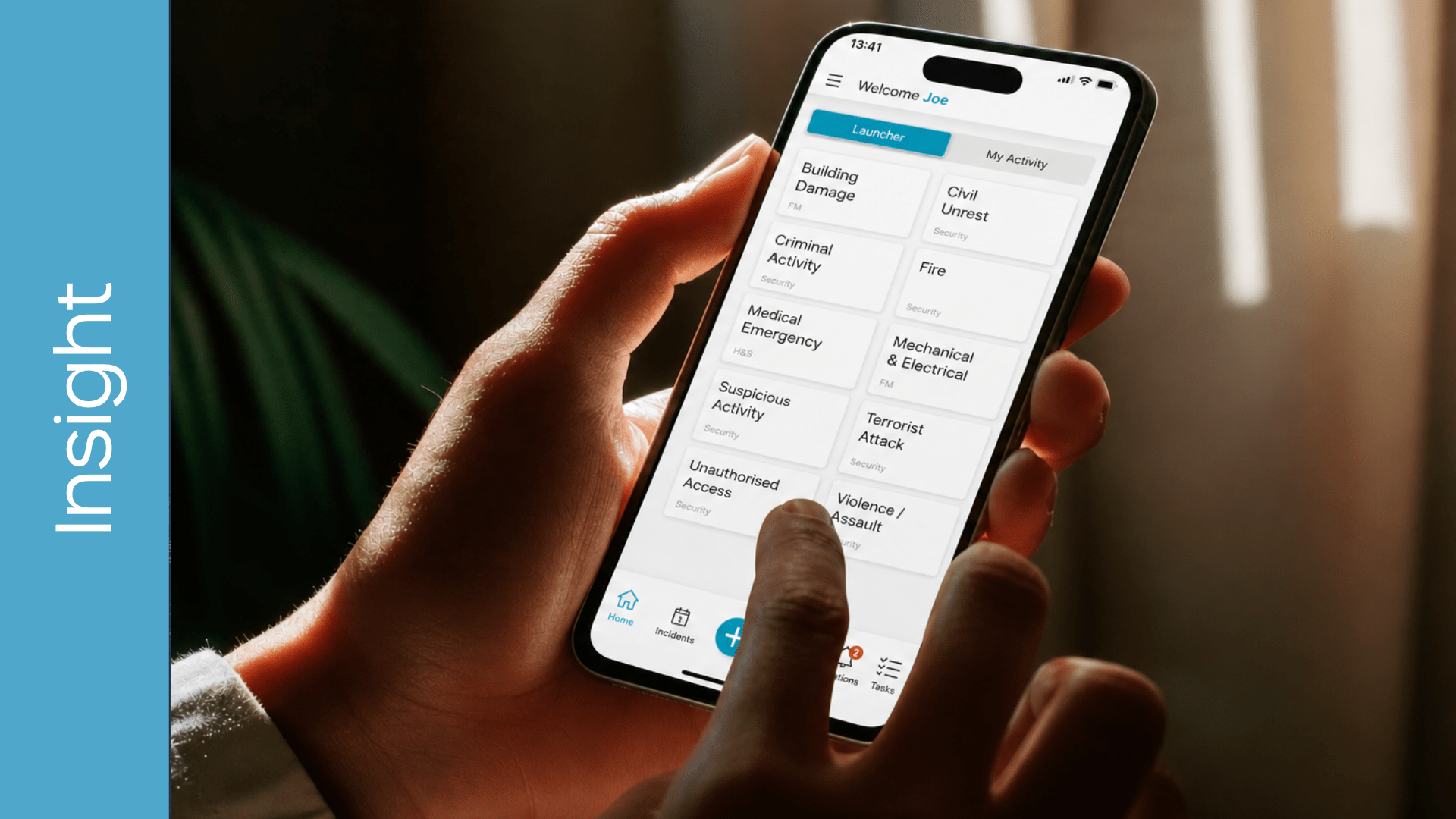
See it in action. Explore the Zinc platform and find out how faster incident response could improve your organisation’s security processes.



 +44 (0)20 3989 4859
 info@zinc.systems

