A well-implemented H&S system serves as a backbone during major medical incidents in a workplace - enhancing response efficiency, coordination, and ultimately, the care provided to those affected.
Incident reporting:
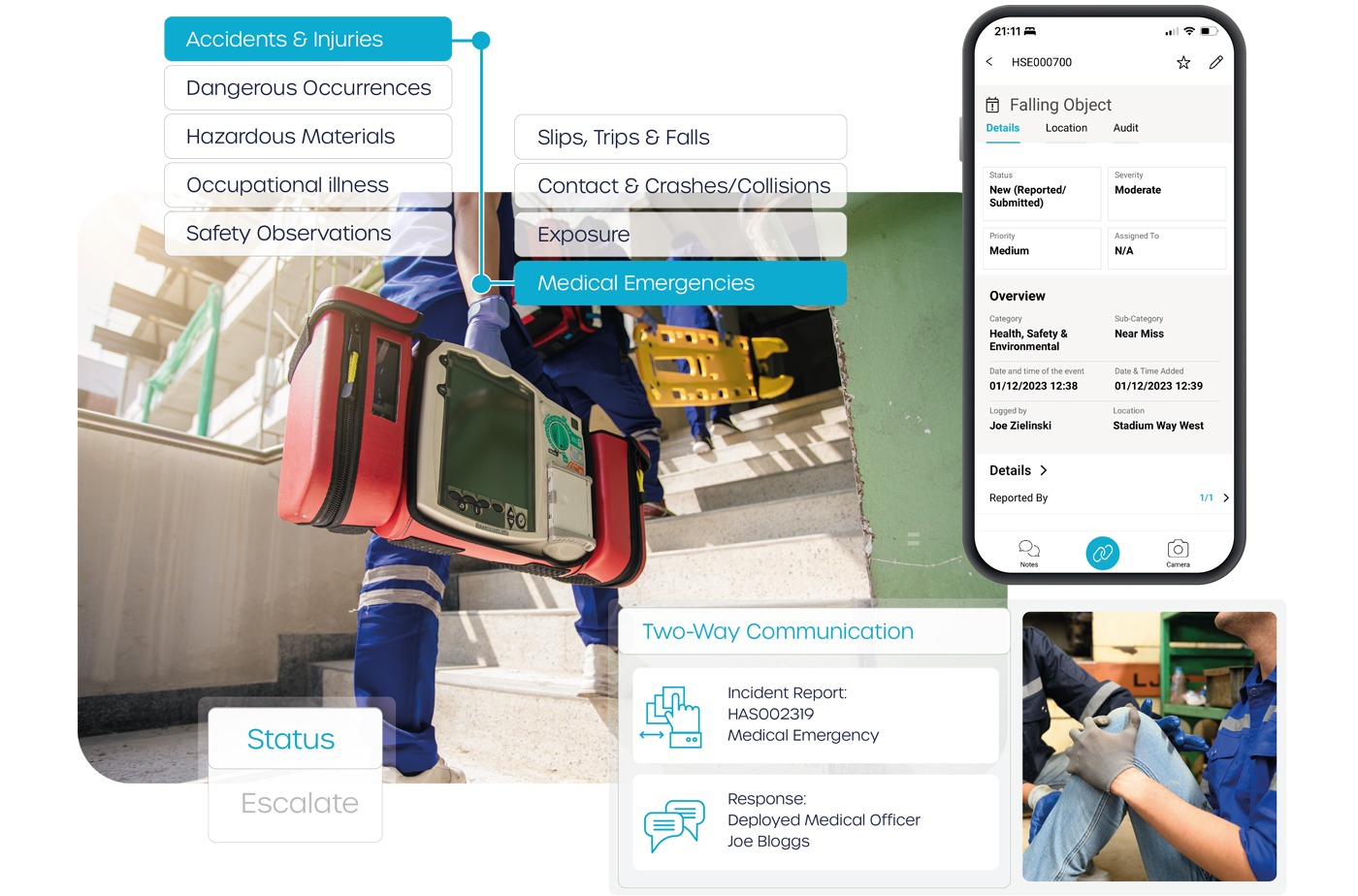
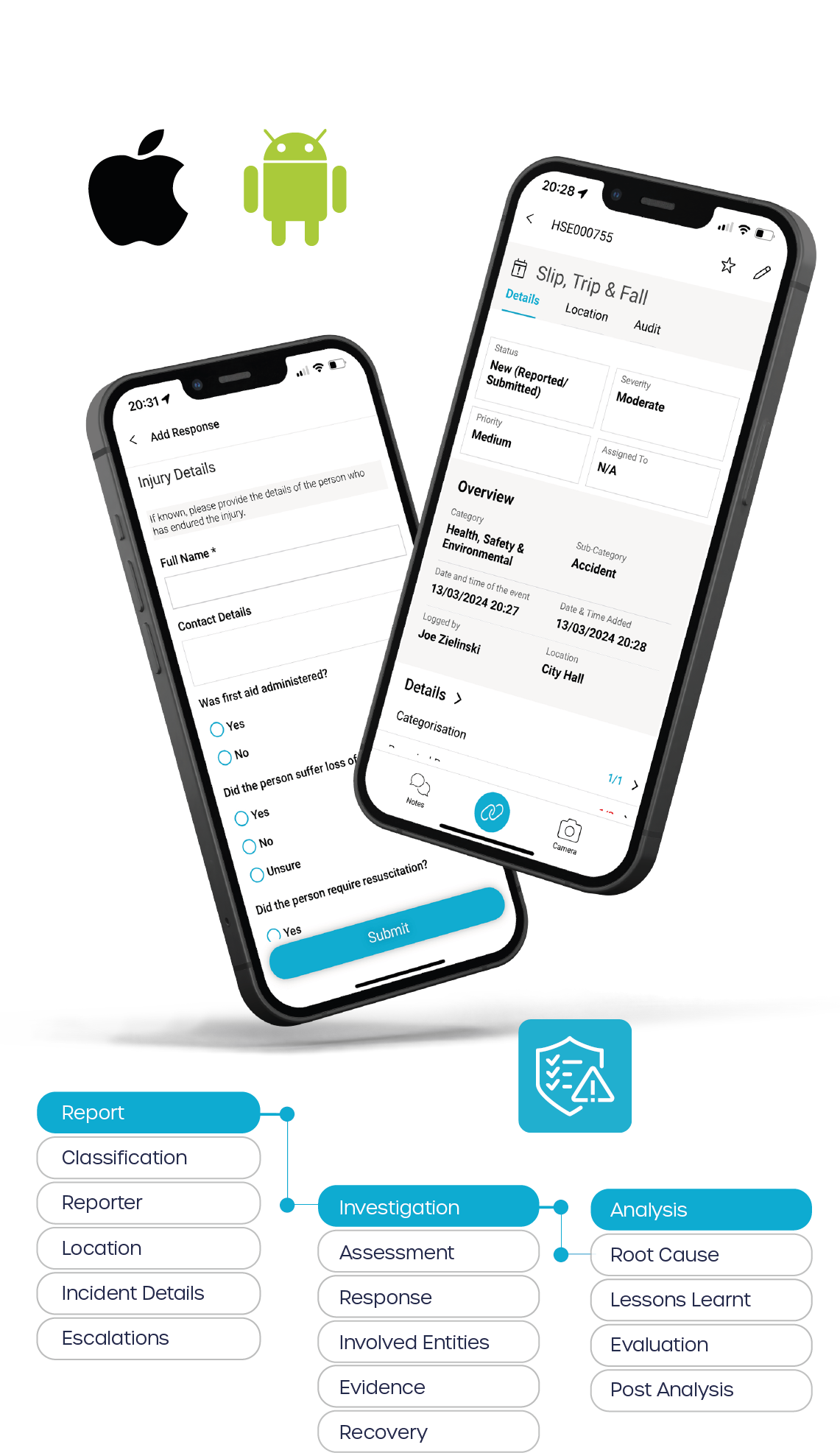
Provide rapid reporting via a mobile App to notify relevant medical personnel, responders, and stakeholders about the incident, enabling prompt response and resource allocation.
Logging of injuries:
Injury forms capture specific details, injury type(s), affected person's personal information, location, date/time, medical facilities, and contributing factors, aiding analysis and prevention.
Collaboration and coordination:
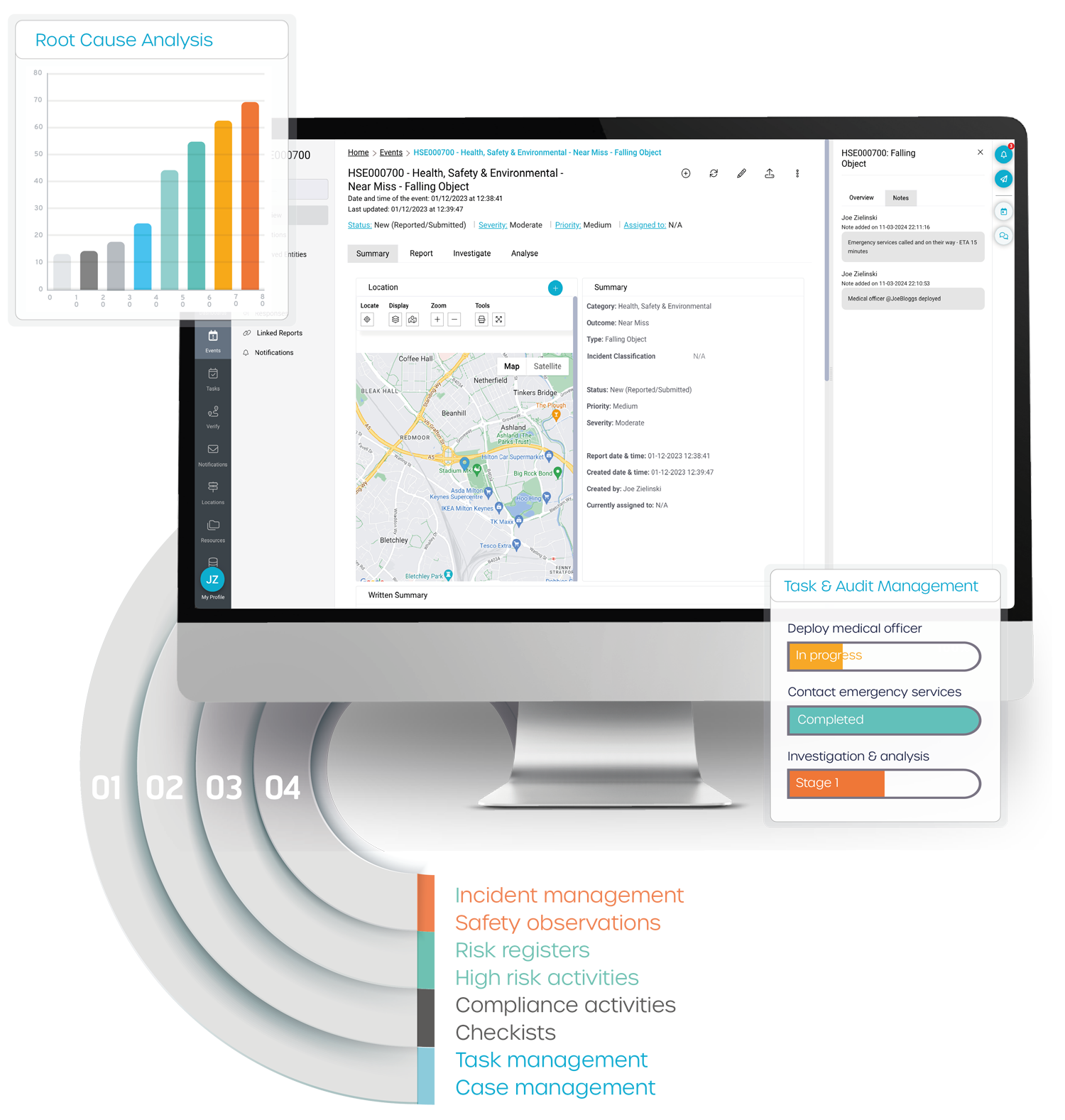
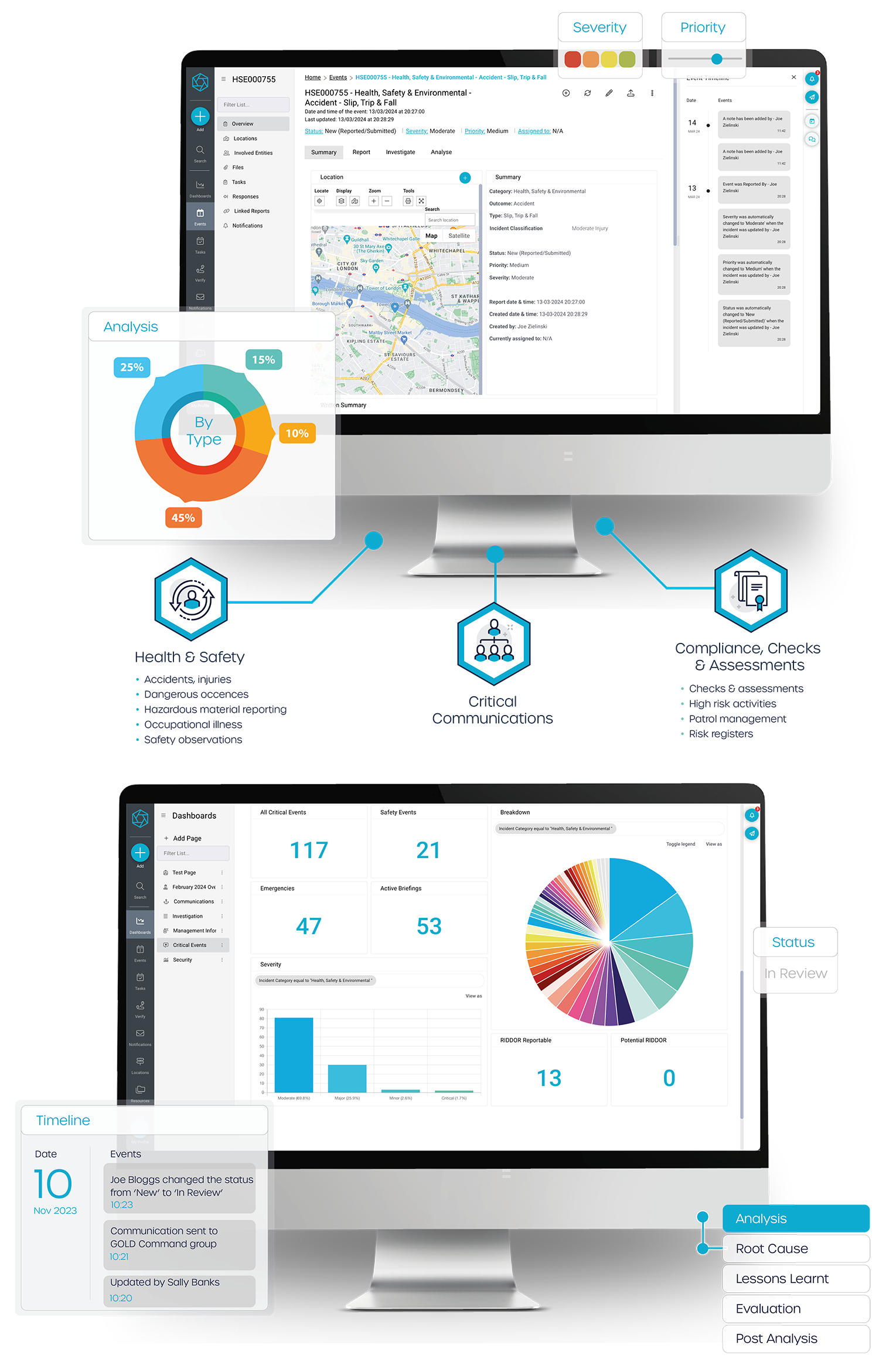
Help in efficiency triaging the incident to different departments of an organisation, managing medical resources like ambulances, medical supplies, and personnel by providing real-time information on availability and requirements. Staff emergency contact details can also be stored and referred to.
Emergency protocols & continuity of operations:
Disseminate established medical emergency protocols and procedures, ensuring that responders follow standardised practices, minimising errors and streamlining care as well as implementing continuity plans.
Communication with the Public:
Facilitate timely and accurate communication with the public, providing guidance on seeking medical assistance, evacuation procedures, or any necessary precautions to take.
Data protection and access restrictions:
Limit data access to authorised individuals, minimising exposure, and safeguarding personal data to designated stakeholders.
Evidence and case management:
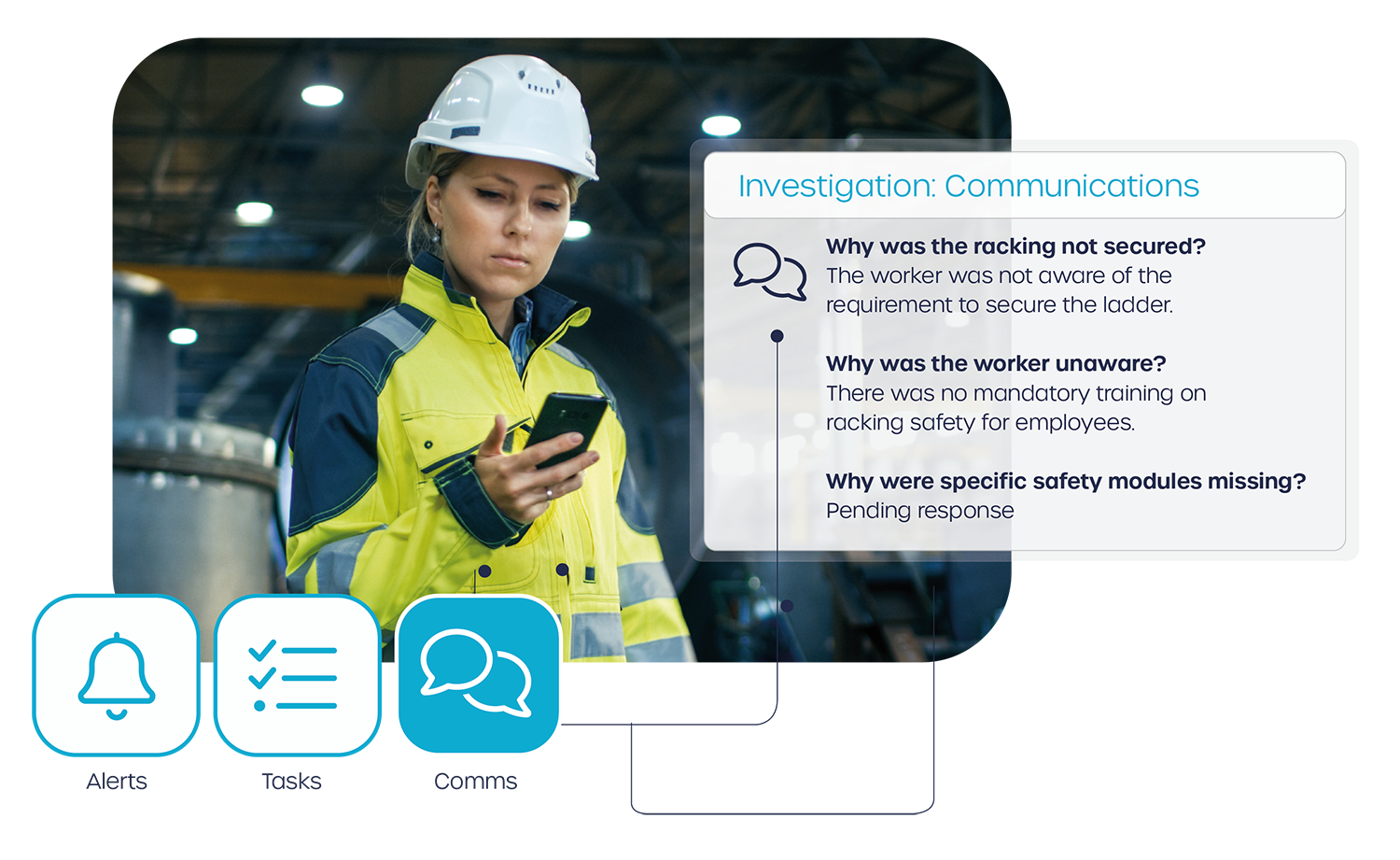
Provide secure evidence collation involving the gathering of witness statements, linked incidents and CCTV footage - organising and uploading this data for investigations, ensuring comprehensive documentation and analysis.
Legal and litigation protection:
Provides legal protection for the organisation, demonstrating due diligence and adherence to safety regulations in case of legal challenges. Our H&S platform can also support uninsured losses by showcasing compliance and evidence that if not handled correctly would not be covered by insurance policies.
Compliance & Regulation
Maintain compliance with health and safety regulations and ensures proper documentation of incident reports, providing crucial data for escalation to regulatory bodies. Examples can include; RIDDOR (Reporting of Injuries, Diseases and Dangerous Occurrences Regulations, UK) and OSHA (Occupational Safety and Health Administration, USA) - these external bodies oversee and mandate the reporting of work-related incidents, diseases, and dangerous occurrences for safety monitoring.
Post-Incident Assessment:
After the incident, the platform can assist in conducting a comprehensive review and assessment of the response, identifying strengths and areas needing improvement for future incidents. Regular assessments and audits as part of the health and safety system allow for ongoing improvements, lessons learnt and refining protocols and procedures.